Croatia Island-Hopping & Hiking 6 Nights
Explore the Adriatic Islands & Trails
Price Per Person
Starting at TWD 82,000
Category
Starting from Croatia’s second-largest city, Split, this journey combines island-hopping and hiking all the way to Dubrovnik, passing through Hvar, Korčula, and Mljet National Park. This trip takes you across multiple destinations, offering both challenges and rich experiences. Daily walking distances range from 10–15 km, with routes including uphill and downhill sections, requiring good physical fitness. The itinerary is best suited for travelers who enjoy long, active hikes.

Transportation
- Transferring
- Split Airport - hotel in Split
- Hvar - Velo Grablje
- Korčula - Pupnat
- Dubrovnik hotel - Port Gruž
- Port Gruž - Dubrovnik center
- Dubrovnik hotel - Dubrovnik airport
- Ferry Transferring
- Split - Hvar
- Hvar - Korčula
- Korčula - Mljet
- Mljet - Dubrovnik
- Dubrovnik - Lopud 來回

Accommondation
- 6 nights of Accommodation (3-4 star) with Daily Breakfast*
- All rates are based on lead-in/standard room types. Please contact us for upgrade options.
- *4-star accommodation throughout, with the exception of Mljet, which features a 3-star property.

Itinerary
- Local guide for 2 hours walking tour in Dubrovnik
- Entrance ticket for Mljet national park
- Emergency number 24/7
- Use of Fiore APP – offline navigation with POI’s
- Route notes and maps and information package

Others
- Overseas Travel Insurance: $10M TWD Travel Accident / $1M TWD Medical (Reimbursement) / $1M TWD Emergency Rescue
- Travel Liability Insurance (TPL): $5M TWD Accident / $200K TWD Medical (Valid for departures from Taiwan only)
- Travel Inconvenience Insurance: Covers flight/baggage delays, etc.
- Travel Consultation Services
- Data Plans
Trip Rules
- Pricing (Per Person, Based on Double Occupancy)
- Travel Dates & Prices:
- 25 Apr – 19 Jun: TWD 82,000+
- 20 Jun – 19 Sep: TWD 90,000+
- 20 Sep – 10 Oct: TWD 83,000+
- Notes:
- Applicable dates: 25 April – 10 October 2027. Other dates require a separate quote.
- Prices may vary during peak season, hotel star rating upgrades, or other adjustments; final rates are based on actual hotel bookings. Early reservation is recommended.
- Prices do not include airfare, passports, visa fees, train sleeper fees, or city taxes.
Trip Map
Detailed Itinerary
Day1 Arrival Split / Overnight Split
Take a transfer from the airport to your accommodation in Split. Today is at your leisure.
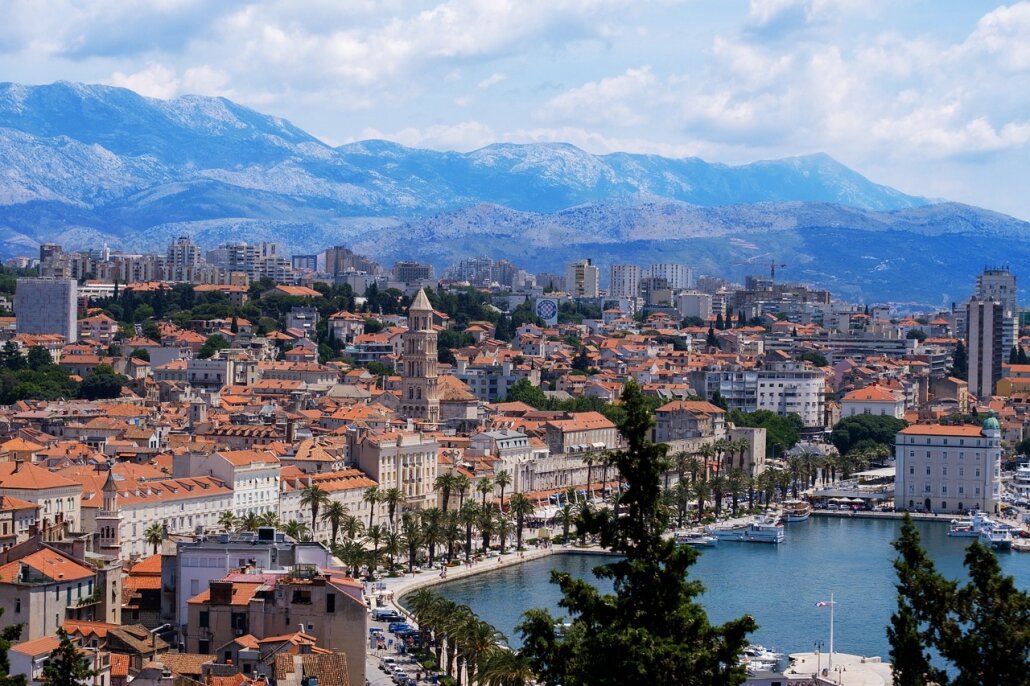
For a recommended one-day tour in Split, start with Diocletian’s Palace, a magnificent Roman-era landmark.
Next, climb the St. Domnius Bell Tower within the palace to enjoy spectacular views of the city and harbor. Nearby, visit the Cathedral of St. Duje to admire its Romanesque and Gothic architectural styles. Then, take a leisurely stroll along the Riva Promenade to experience the local atmosphere.
For lunch, enjoy authentic Croatian cuisine at a local restaurant. In the afternoon, head to Marjan Hill and hike to the summit for panoramic views of Split. Overnight in Split.
Day 2 | Split to Hvar – Hiking 11.7 km / Overnight in Hvar
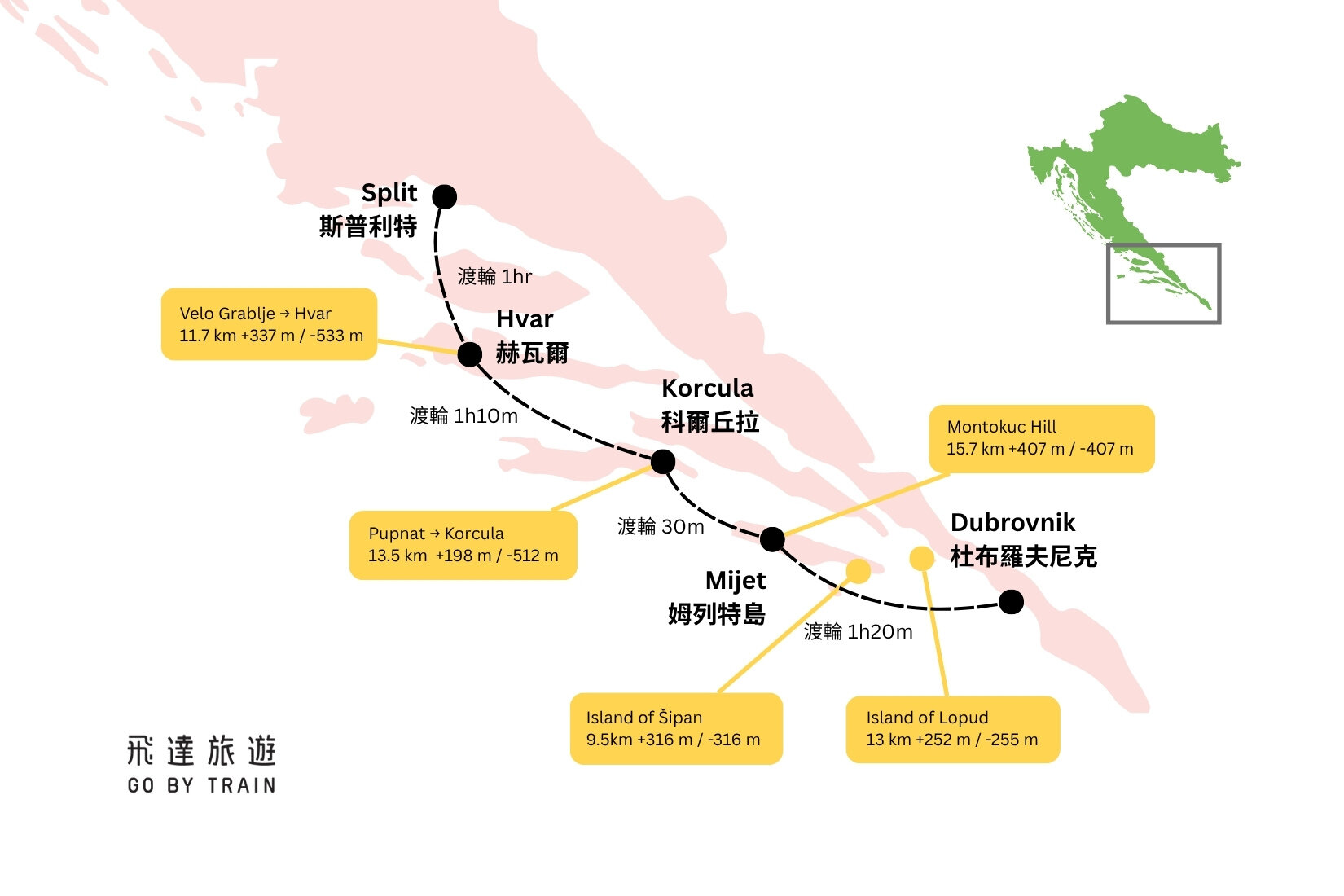
Depart from Split by ferry (schedule: 8:30–9:35) to Hvar, then transfer by shuttle to the hiking starting point at Velo Grablje (about 25 minutes).
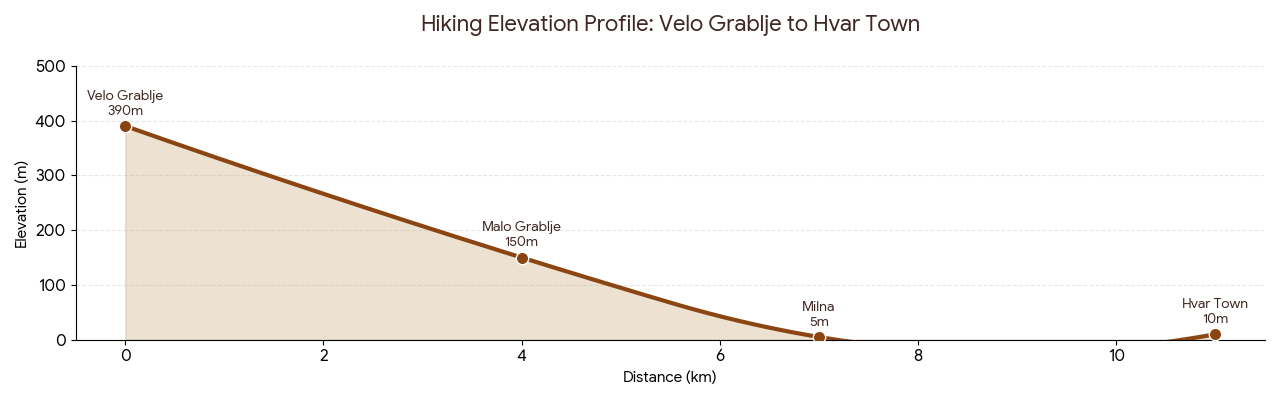
After breakfast, walk from your hotel to Split Port and board the ferry to Hvar Island. Upon arrival, take a shuttle to Velo Grablje to begin your hike through the villages of Velo Grablje and Malo Grablje.
As you walk through these ancient villages, you’ll see traditional architecture and follow downhill trails through olive groves to Malo Grablje, home to the island’s first lavender distillery. Lavender was once one of the main export products of the area. Continue downhill through Milna Village, winding along pine-lined paths and wild Mediterranean vegetation, all the way along the coast back to Hvar Town.
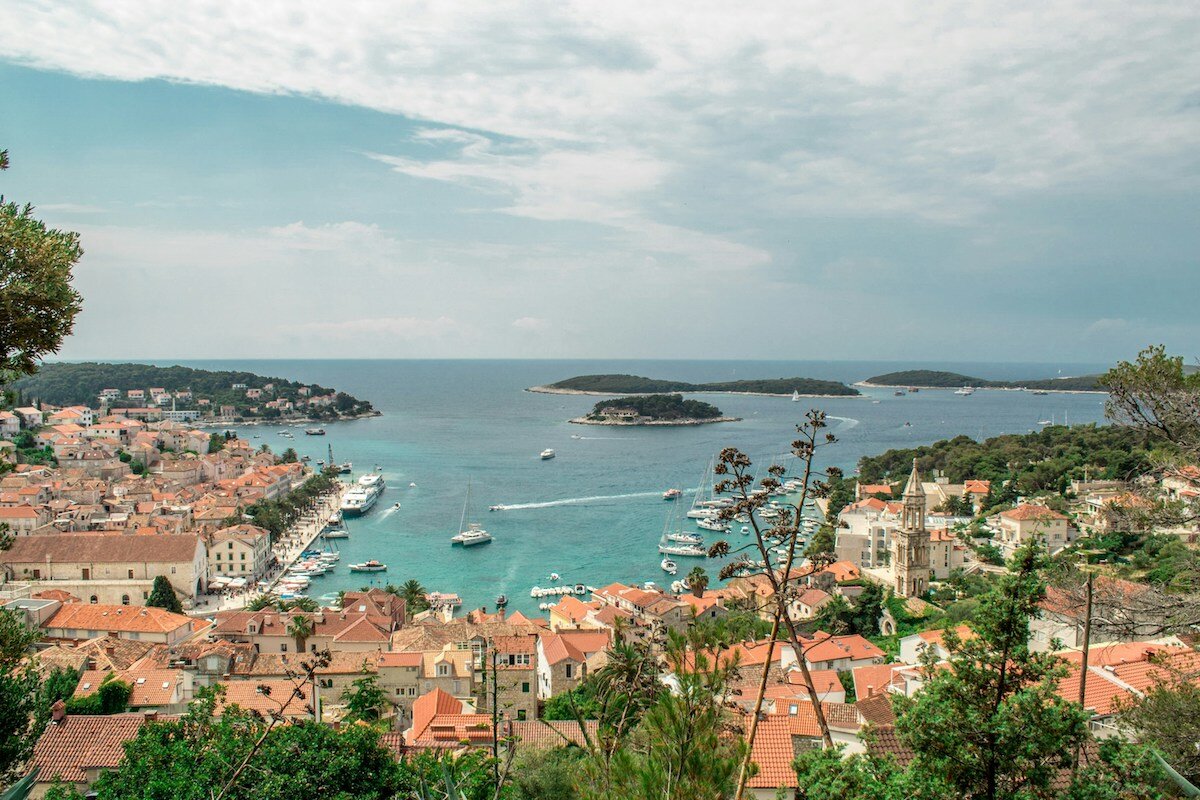
Hvar is one of the most famous and popular islands in Croatia, renowned for its sunny weather, beautiful beaches, and historic architecture. The island boasts a rich history and cultural heritage. You can climb Fortica Španjola (Fortica Fortress) for panoramic views of the town and surrounding islands.
- Hiking Distance: 11.7 km
- Elevation Gain/Loss: +337 m / -533 m
Another notable site is the Fortress of Petar Hektorović, also known as Tvrdalj Castle, located in Stari Grad on Hvar Island. Built in the 16th century by the humanist poet Petar Hektorović, the fortress combines Italian Renaissance style with local architectural traditions. The interior includes a typical Dalmatian courtyard, Hektorović’s residence, library, and a pool.
Overnight in Hvar, staying at a hotel in the old town.
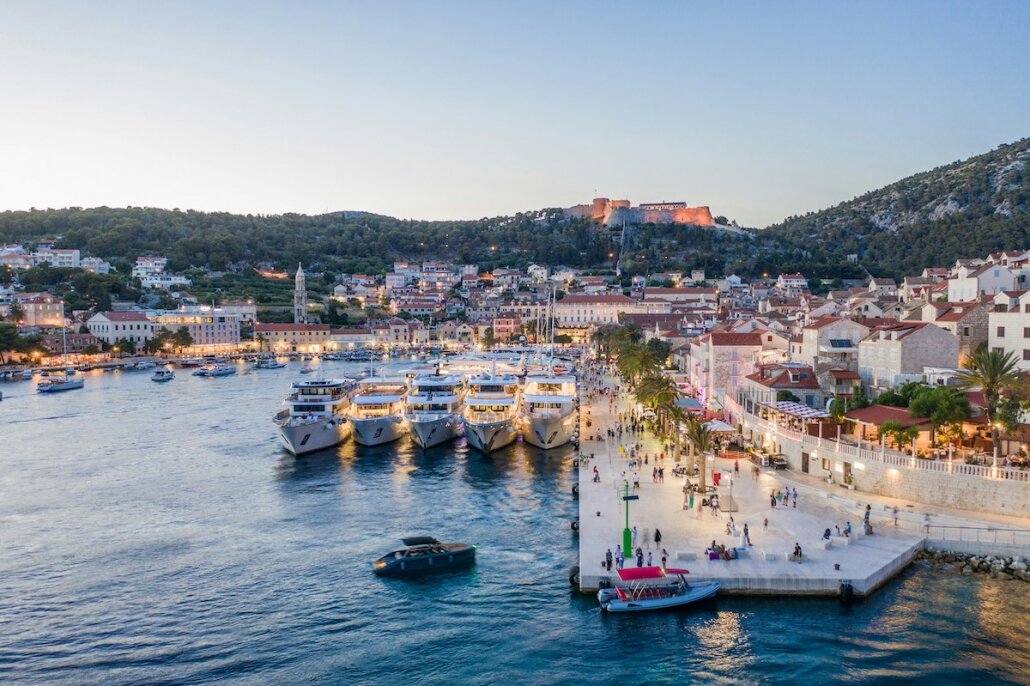
Hvar
The main town, also called Hvar, features charming stone streets, cafés, and restaurants. St. Stephen’s Square is the town’s central hub, surrounded by Renaissance-style buildings and historic cobblestone streets, full of charm and vibrant life. Hvar is also famous for its long-standing tradition of grape cultivation and winemaking, offering opportunities to visit vineyards and taste local wines.
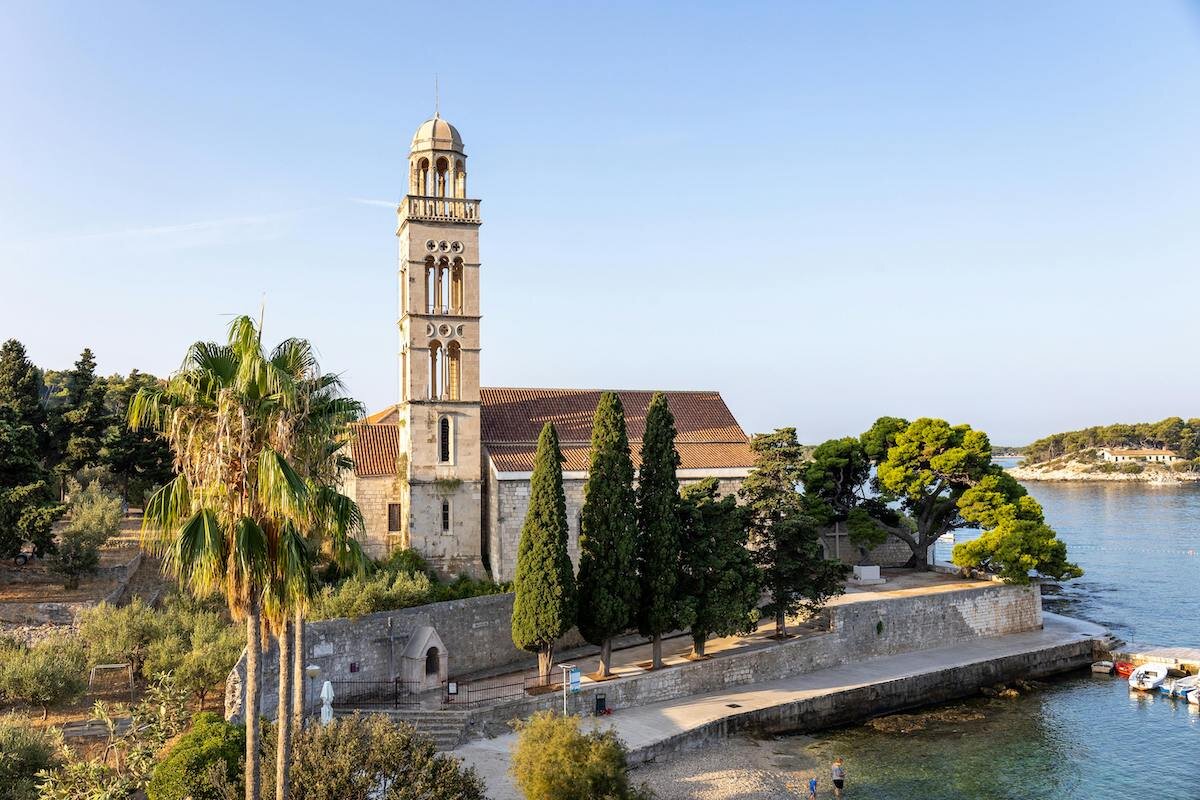
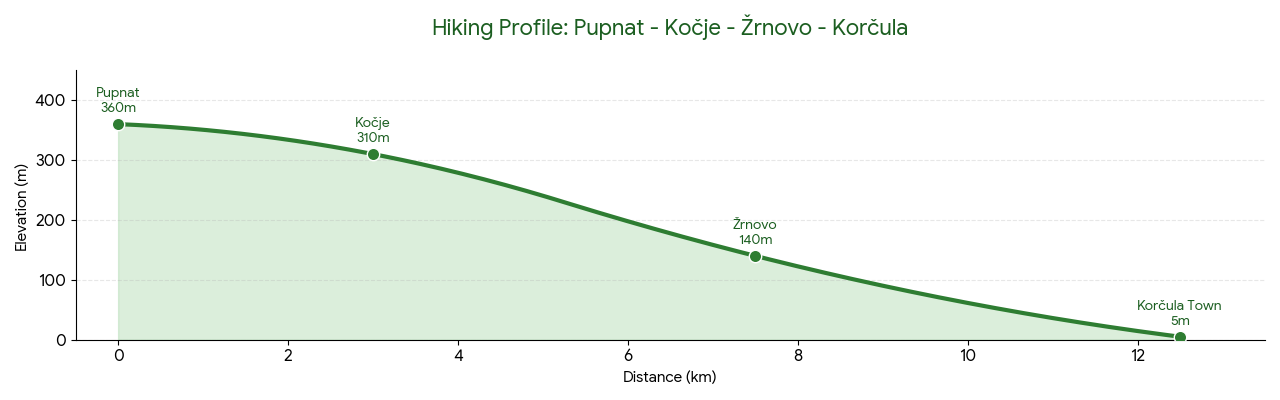
Day 3 | Hvar to Korčula – Hiking 13.5 km / Overnight in Korčula
Take a ferry from Hvar to Korčula (schedule: 8:50–10:00), then transfer by shuttle to the hiking starting point at Pupnat (about 10 minutes).
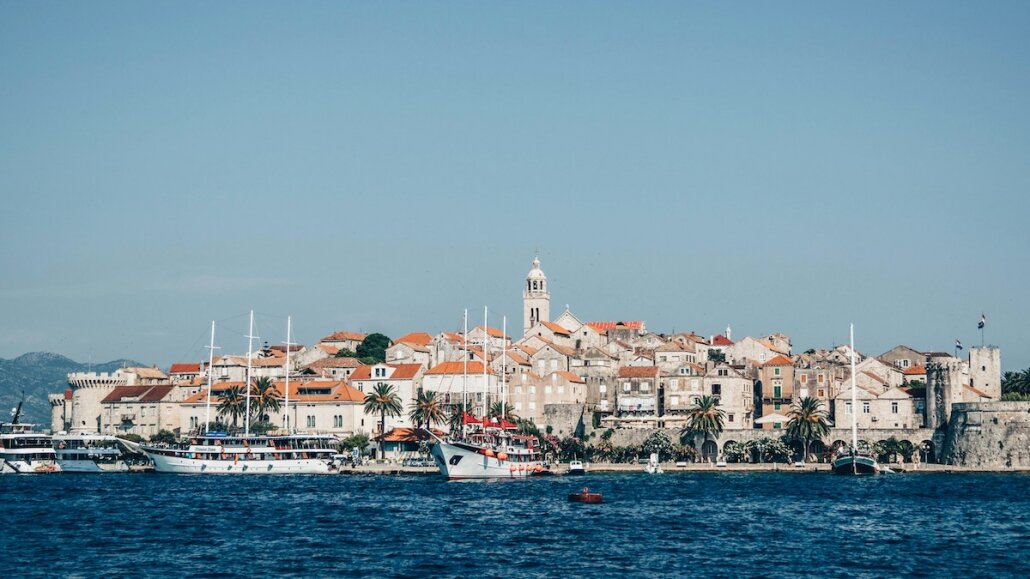
In the morning, board the ferry to Korčula Island. Upon arrival, you will be transferred to Pupnat Village to begin your hike. Korčula is the birthplace of Marco Polo and a story-filled stone town with charming narrow streets. From the late 14th century, thanks to high-quality stone from Dubrovnik, local stonemasonry developed rapidly. Skilled craftsmen established workshops and fulfilled orders from Dubrovnik. By the 15th century, the settlement grew from a small village into a flourishing town, constructing new houses and expanding Korčula City.
- Hiking Distance: 13.5 km
- Elevation Gain/Loss: +198 m / -512 m
Overnight in Korčula Town.
Day 4: Korčula to Mljet – Hiking 15.7 km / Overnight in Mljet
Travel from Korčula to Mljet by ferry (10:10–10:40) and enjoy a day of hiking on Mljet Island.
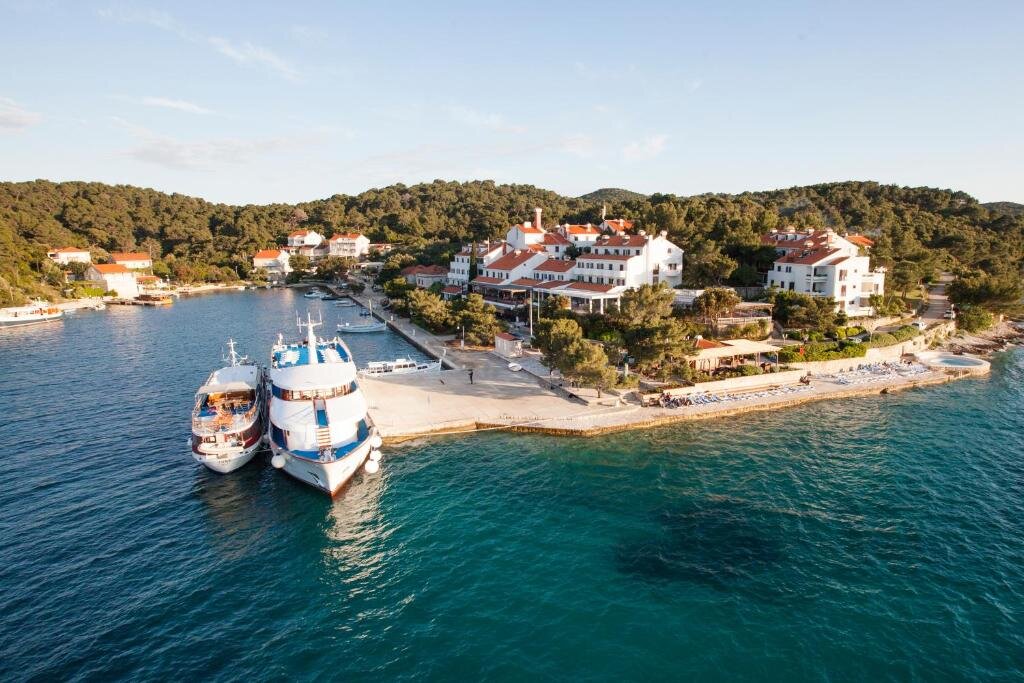
In the morning, take the ferry to Pomena, Mljet Island. Mljet is known as the “Green Emerald” of Croatia, famous for its dense forests and grasslands, as well as the two saltwater lakes within the protected area. Remember to bring your swimsuit — you can swim in the lakes or rent a small boat to explore the islet in the middle of the lake.
Mljet is also home to the historic Benedictine Monastery and the Church of St. Mary, built in the 12th century and surrounded by beautiful natural scenery. Today’s hike will take you to Montokuc, the highest peak in Mljet National Park. Overnight stay on Mljet.
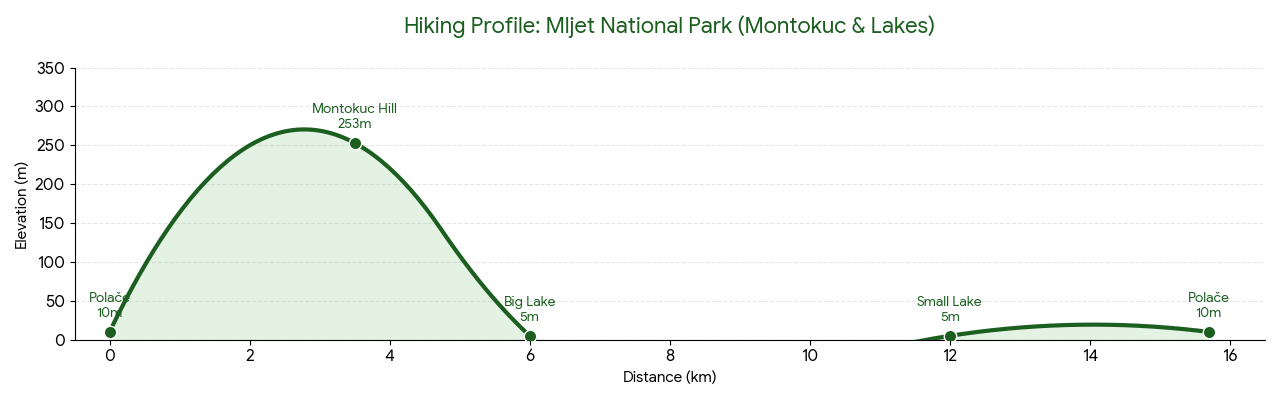
- Hiking distance: 15.7 km
- Elevation gain/loss: +407 m / −407 m
Day 5: Mljet to Dubrovnik – Rest Day (No Hiking) / Overnight in Dubrovnik
Take the ferry from Mljet to Dubrovnik (10:45–12:05), followed by a transfer to Dubrovnik city center (approx. 15 minutes).
Upon arrival, you will meet a local history and culture expert in Dubrovnik. Your local guide will lead you on a walking tour through the UNESCO World Heritage–listed Old Town. After the guided walk, you will have free time to explore the city on your own and return to your hotel. The afternoon is at leisure.
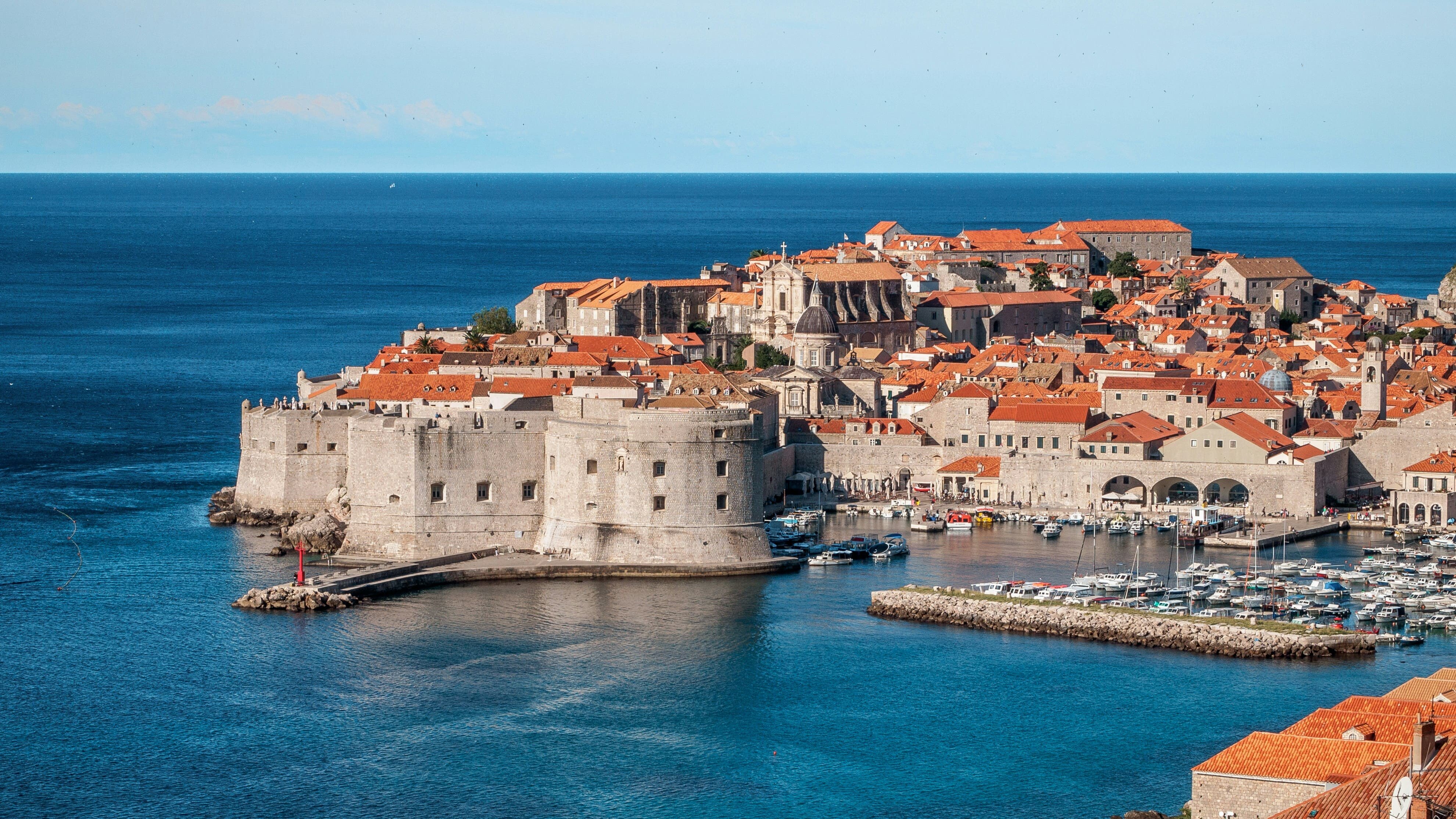
Located in southern Croatia, Dubrovnik is often referred to as the “Pearl of the Adriatic.” This coastal city is famous for its exceptionally well-preserved medieval city walls, making it both a UNESCO World Heritage Site and one of the most popular destinations in the world. The Old Town is Dubrovnik’s most iconic attraction, where stone streets and ancient buildings enclosed by the city walls reflect a rich cultural and historical heritage. The fully preserved medieval walls offer spectacular panoramic views of the Old Town and the Adriatic Sea. Pile Gate, one of the main entrances to the Old Town, is a grand and historic gateway with impressive architecture.
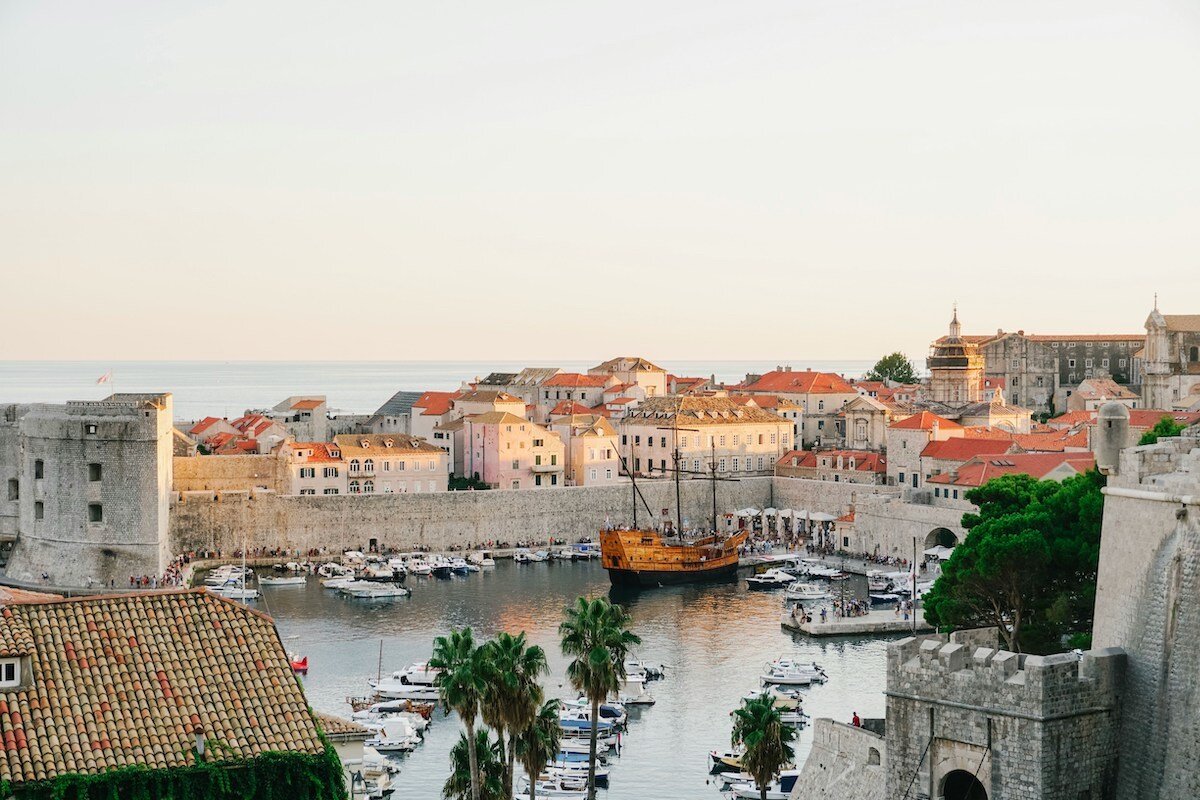
The city is also home to magnificent churches, monasteries, and palaces, reflecting its prosperity and beauty during the Renaissance and Baroque periods. Dubrovnik Cathedral, located in the Old Town, is a grand church that blends Gothic and Renaissance architectural styles and features a richly decorated interior.
Lovrijenac Fortress (Tvrđava Lovrijenac), situated outside the city walls, dates back to the 16th century. Built along a 37-meter-high cliff overlooking the sea, this coastal fortress is now used as a venue for theatrical performances and is renowned for its dramatic setting and breathtaking views.
Beyond its historic landmarks, Dubrovnik also attracts visitors with its crystal-clear waters and charming bays, making it a perfect destination for both cultural exploration and seaside relaxation.
Day 6: Excursion to Šipan or Lopud – Hiking 9–13 km / Overnight in Dubrovnik
Take a ferry from Dubrovnik to Šipan or Lopud for a day of island hiking, then return to Dubrovnik by ferry after the hike.
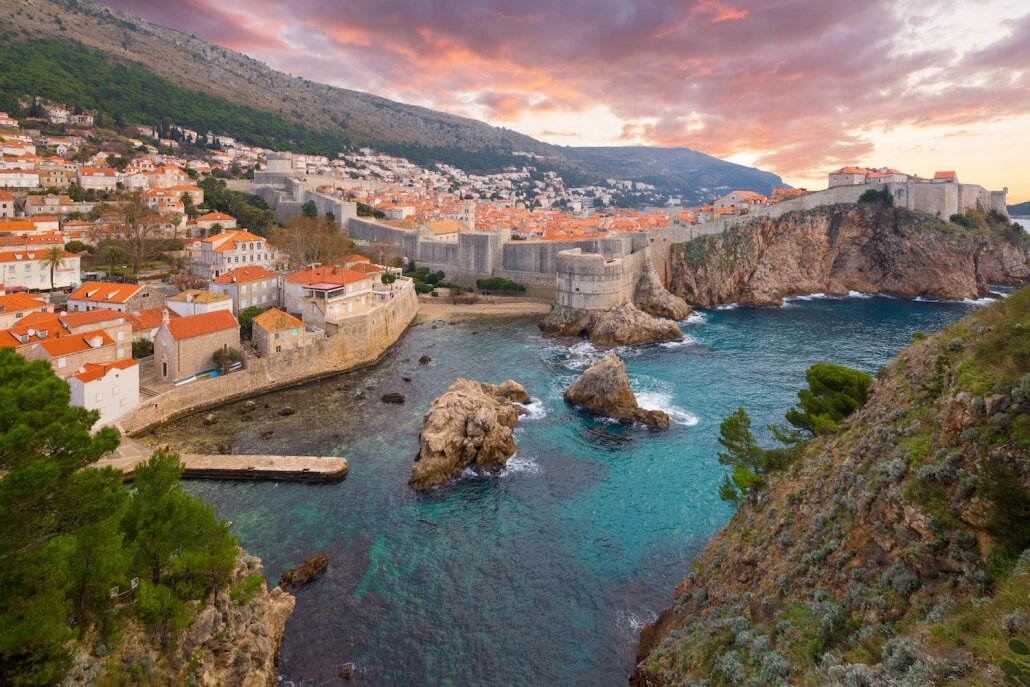
Sipan
As the largest of the Elafiti Islands, Šipan is renowned for its tranquil pastoral landscapes and well-preserved aristocratic summer manors. The island's hiking trail offers a gentle walk through a central plain of olive groves and vineyards, beautifully connecting two charming harbor towns at either end.
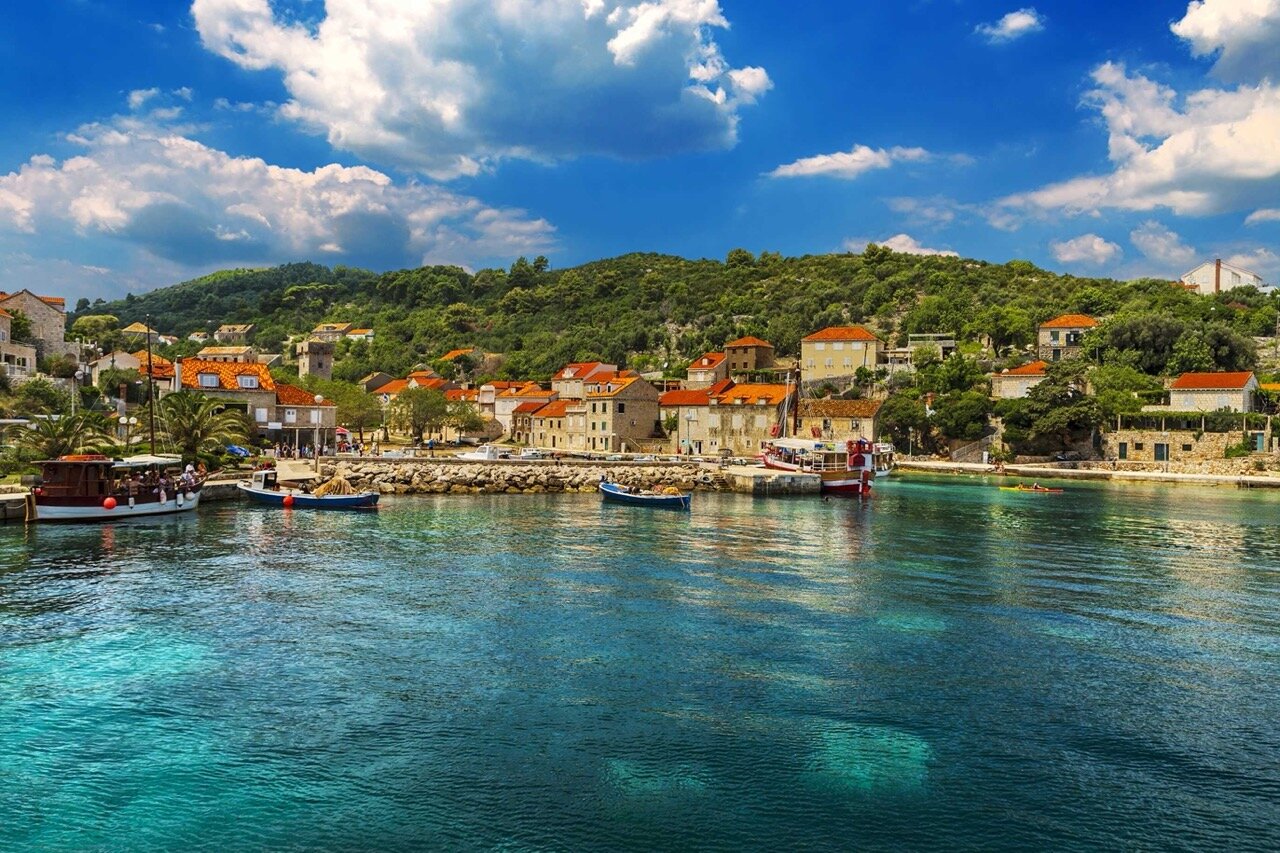
Lopud
This car-free island is a tranquil paradise famous for Sunj Beach, one of the few expansive sandy beaches in the region. It is dotted with ancient monasteries and fortress ruins that whisper stories of its glorious past as a strategic maritime hub.
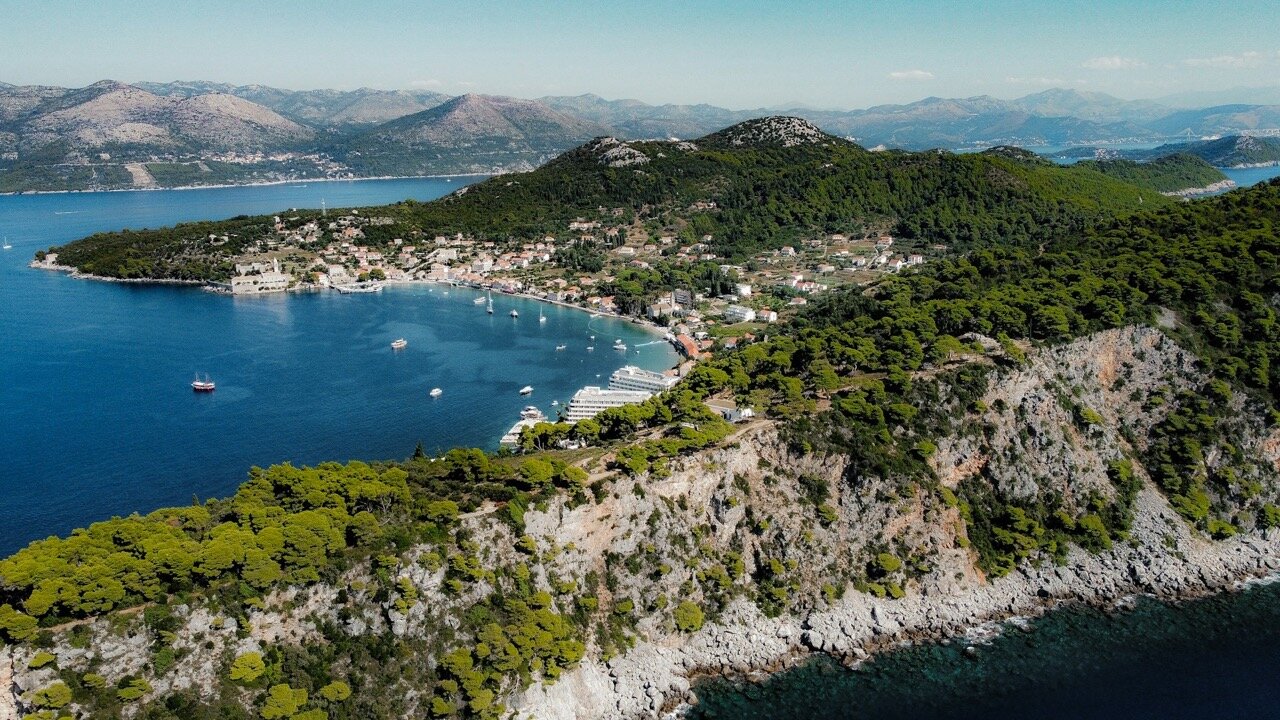
Dubrovnik Day Trip
The Enchanting Elafiti Islands: Choosing Your Island Adventure
These two routes represent the most captivating hiking experiences in the Elafiti Islands. Lopud is renowned for its stunning beaches and monastic ruins, while Šipan is steeped in aristocratic manors and bucolic countryside charm.
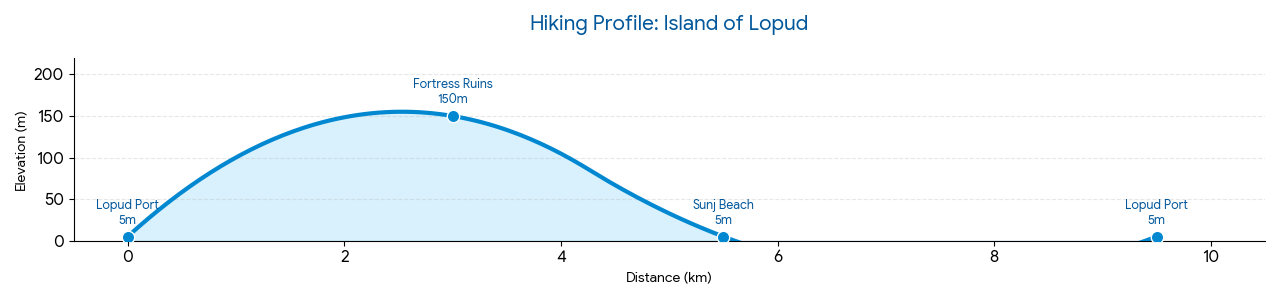
Route 1: Island of Lopud
Starting from the pier, this trail climbs over the hills toward the famous Sunj Beach, passing through atmospheric fortress ruins along the way.
- A Storied Past: Once home to 14,000 residents, it is now a tranquil paradise of fewer than 300 people.
- Highlights: Explore the 15th-century Franciscan monastery ruins and relax at Sunj Beach on the opposite side of the island. This wide sandy beach is a rare find in the Dalmatian archipelago and a true gem in rocky Croatia.
Route 2: Island of Šipan
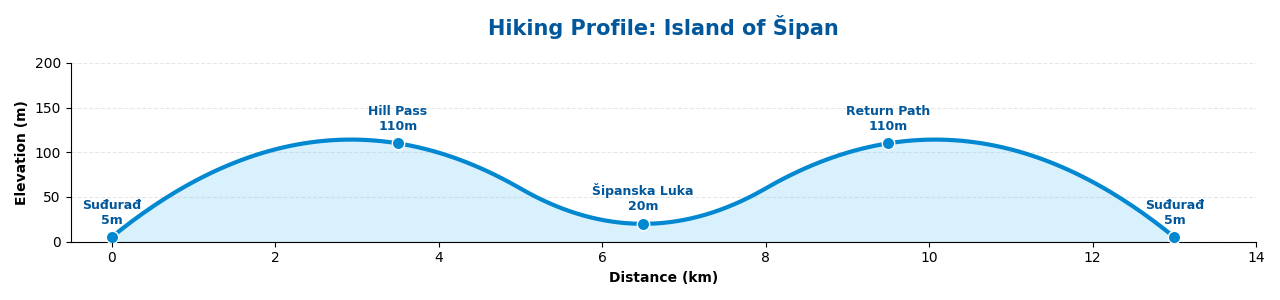
As the largest of the Elafiti Islands, this hiking route traverses the entire island from Suđurađ in the east to Šipanska Luka in the west. The path connects two harbors via a fertile plain of historic estates.
- The Aristocratic Backyard: Once a favorite summer retreat for Dubrovnik's nobility, the island is dotted with over 30 historic Summer Manors.
- Pastoral Scenery: The trail cuts through fertile central plains flanked by olive groves and vineyards, offering a deeply serene atmosphere.
- Culinary Recommendation: Upon reaching Šipanska Luka, be sure to find a seaside konoba (tavern) to try the local seafood—it is the heart and soul of island life.
Which Island Should You Choose?
Match the destination to your "remaining stamina" and travel goals:
1. Low Energy: Just want to lie down and relax 🏖️
- Recommended: Lopud
- Why: Even though the trail has an incline, you don't have to hike. You can simply lounge near the pier or take a 20-minute stroll to Sunj Beach to rent a sunbed for the day. This island offers the strongest "vacation vibes."
2. High Energy: Ready for a cross-island challenge 🥾
- Recommended: Šipan
- Why: The 13km distance is quite substantial. While the slope isn't steep, crossing the entire island allows you to fully experience the Mediterranean flora and estate history. You’ll leave with a great sense of accomplishment.
3. Photographers: Looking for that perfect shot 📸
- Recommended: Lopud
- Why: Hiking up to the Fortress Ruins provides a breathtaking panoramic view of the archipelago. The Franciscan monastery also offers a stunning historical backdrop. Lopud provides more visual layers (heights, ruins, beaches) compared to Šipan.
4. Culture Seekers: Craving "Old Money" history 🏰
- Recommended: Šipan
- Why: This was the playground of Dubrovnik’s elite, highlighted by the Sorkocevic family manor. Compared to the "lost world" feel of Lopud, Šipan exudes the elegance and storytelling of an ancient luxury district.
5. Water Lovers: Dedicated to swimming 🏊
- Recommended: Lopud
- Why: Sunj Beach is a rare shallow-water sandy beach where the depth increases very gradually, making it perfect for wading and playing.
- Pro Tip: If you prefer diving directly from rocks into deep, turquoise water, the pier area at Šipanska Luka offers clearer, crystal-calm conditions ideal for snorkeling.
FAQs
What should I do if I accidentally miss my return ferry?
Are there any dangerous animals on the trail?
If the weather is bad that day, should the itinerary still be the same?
Pre-Departure Tips
Hiking Culture & Etiquette: Walk Like a Local
- Trail Markers (Knafelc Blaze): The standard trail marker in Croatia is a red circle with a white dot in the center. Seeing this "bullseye" means you are on the right track.
- Greeting Culture: When encountering hikers coming from the opposite direction, it is customary to offer a simple "Dobar dan" (Good day/Hello) or a friendly nod and smile.
- Leave No Trace: These islands—especially the National Parks—are highly protected ecosystems. All trash, including organic waste like fruit peels, must be carried out and disposed of back in town.
- Embrace the Slow Pace: Here, hiking isn't just about reaching the destination; it’s about "stopping for the view." Croatians have a unique concept called "Fjaka"—a sublime state of mind and body where you aspire to do absolutely nothing. Taking a 30-minute break at a secluded bay to just stare at the sea is a perfectly authentic way to hike.
Conquering the Mediterranean Challenges
- Footwear is Everything: While these are considered "light" hikes, the terrain is often Karst topography—sharp, jagged, and unstable limestone. Avoid flat-soled canvas shoes. At the very least, wear trainers with good grip, though anti-slip hiking shoes are highly recommended.
- Sun Protection is Survival: Shade can be inconsistent (the ?ipan plains, for example, are quite exposed), and Mediterranean UV rays are intense. Be sure to pack high-SPF sunscreen, a hat, and polarized sunglasses.
- Water Management: Outside of the main town piers, there are virtually no refill stations along the trails. Ensure you carry at least 1.5L to 2L of water per person, and remember to hydrate frequently before you actually feel thirsty.